© Andreea Bacanu 2024 All Rights Reserved
Spotify Party
Jan - May 2021
Web application in React.js, User research, Personas, Scenarios, Prototyping
Description
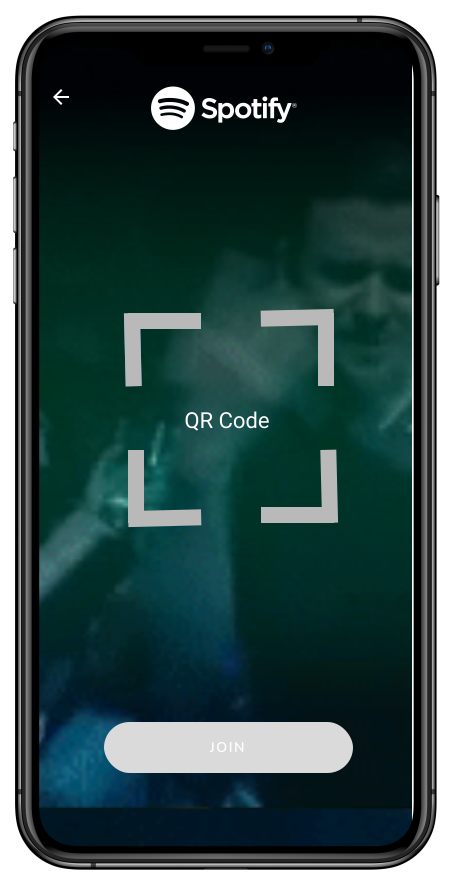
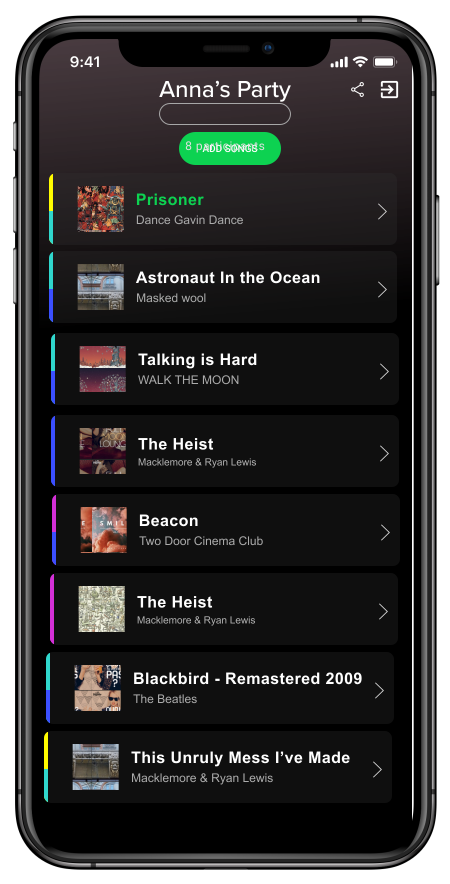
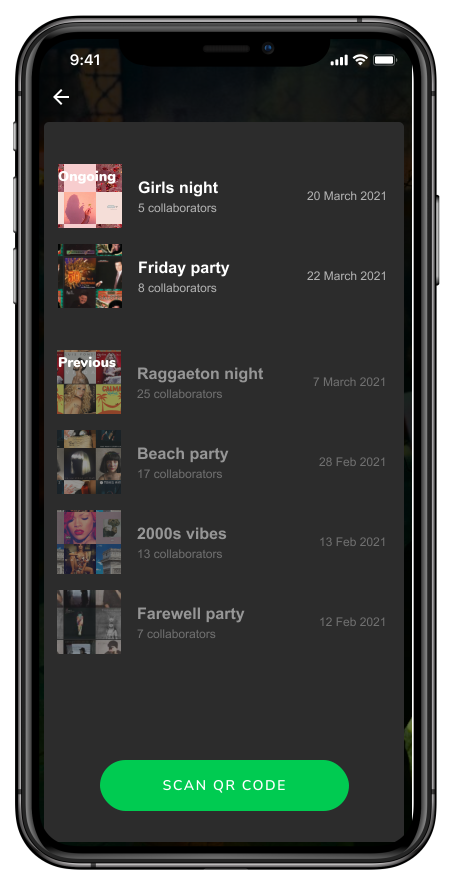
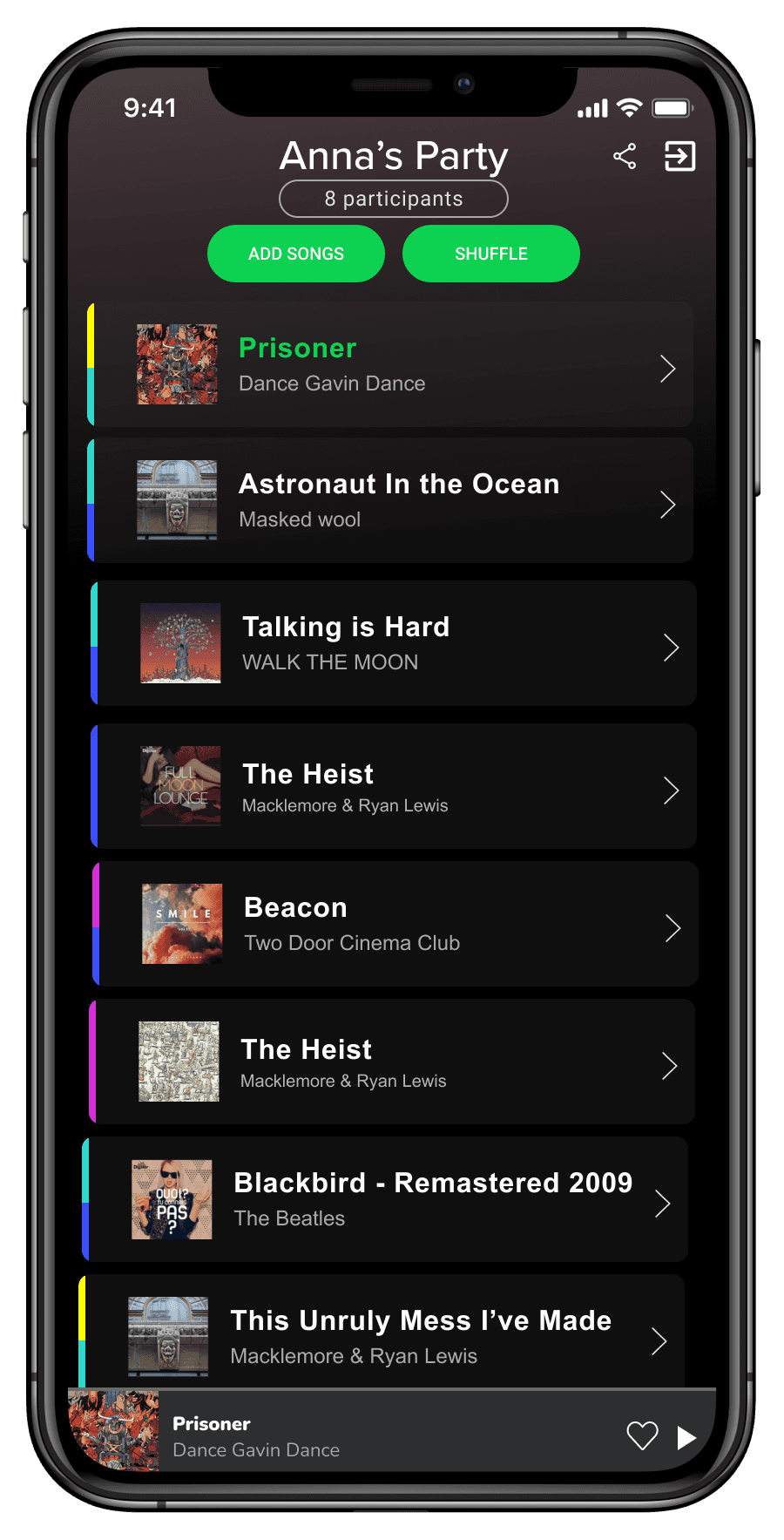
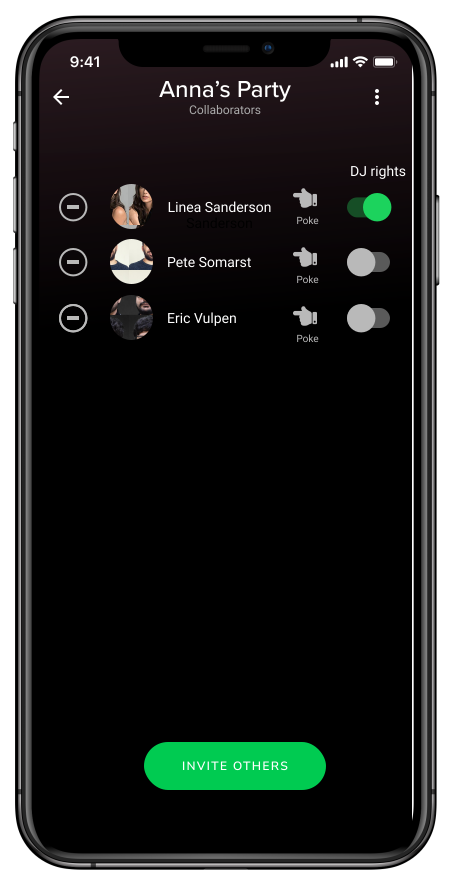
Spotify Party is a collaborative playlist feature designed to be used on the spot, when you and your friends can't decide on a playlist at a party. Share the DJ-ing responsibility between yourselves and create a space where everyone's favourite tunes are included!
Discovery
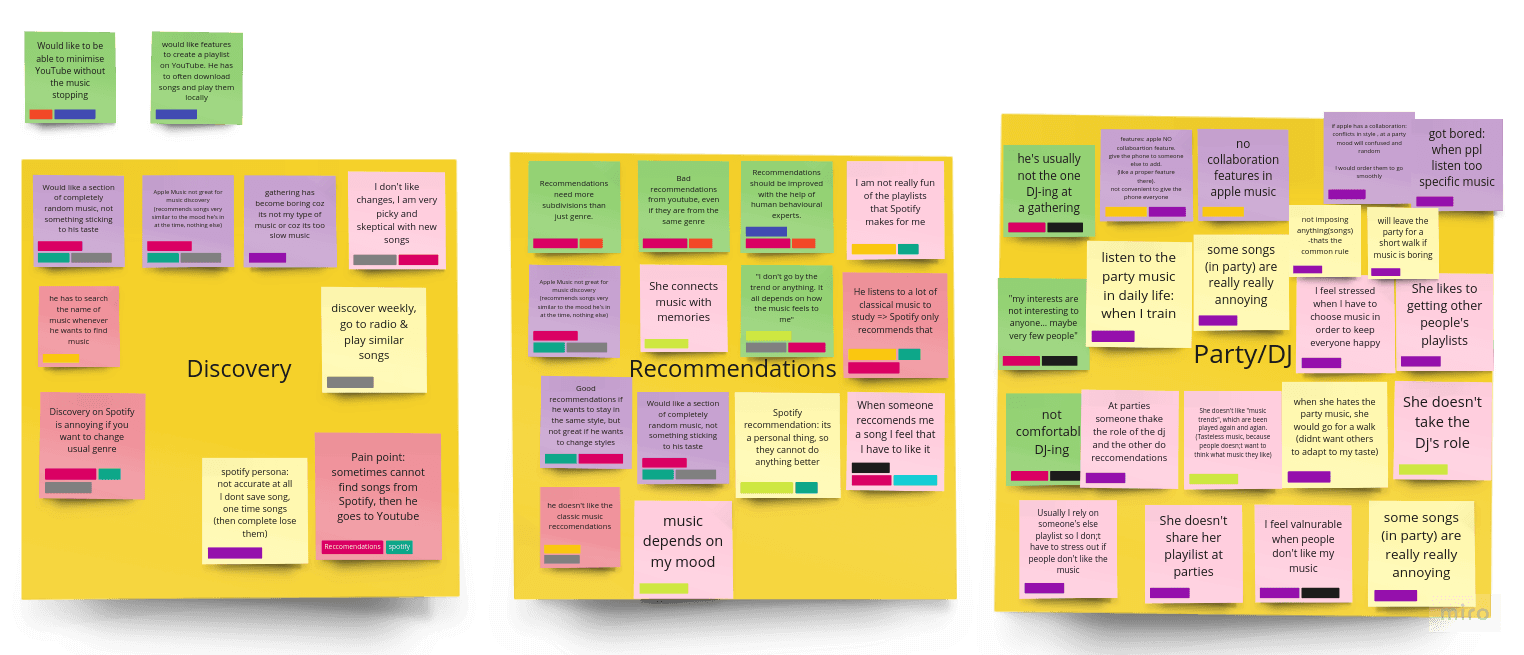
We investigated how young people play music collaboratively at social gatherings and why. We performed 12 semi-structured interviews with people who throw parties or regularly join parties. The thematic analysis of interview insights revealed three main problem areas: music discovery, recommendations, and party / DJ-ing behaviour. We further focused on the third category: the group dynamic that comes with playing music at a party and the pressure of being a DJ.
Key insights
Dj-ing in social contexts makes people feel terrified because they are afraid that their music tastes would be judged.
Music applications have limited functionality for accommodating everyone during a party.
Ultimately, the majority of people DJ-ing want to make everyone at the party happy.
Define
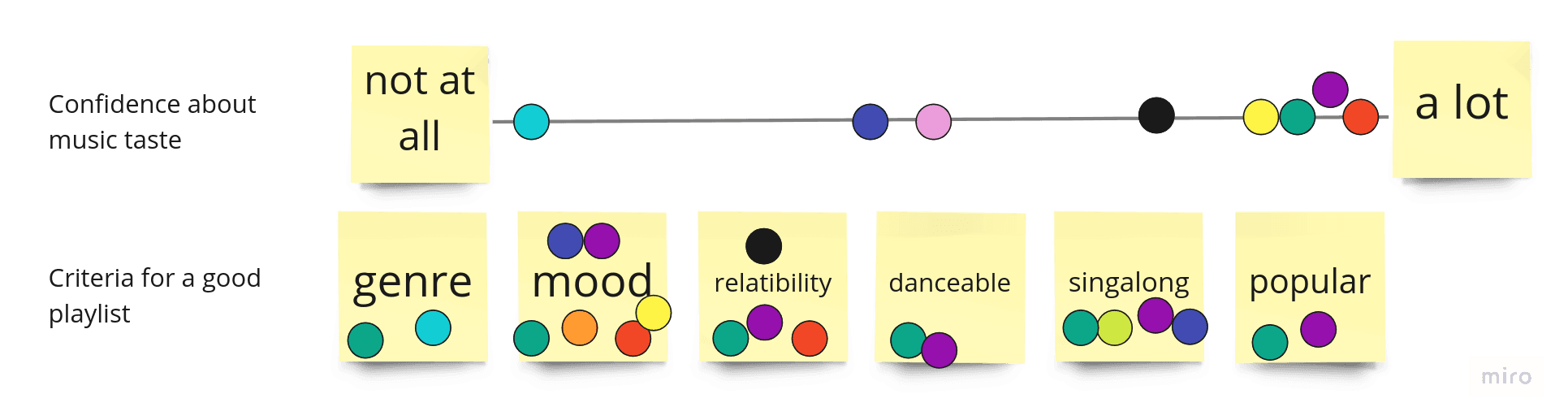
Based on interview insights, we developed 15 behavioural variables to help us create personas. Each interviewee (coloured dot) became a sum of all variables.
Personas
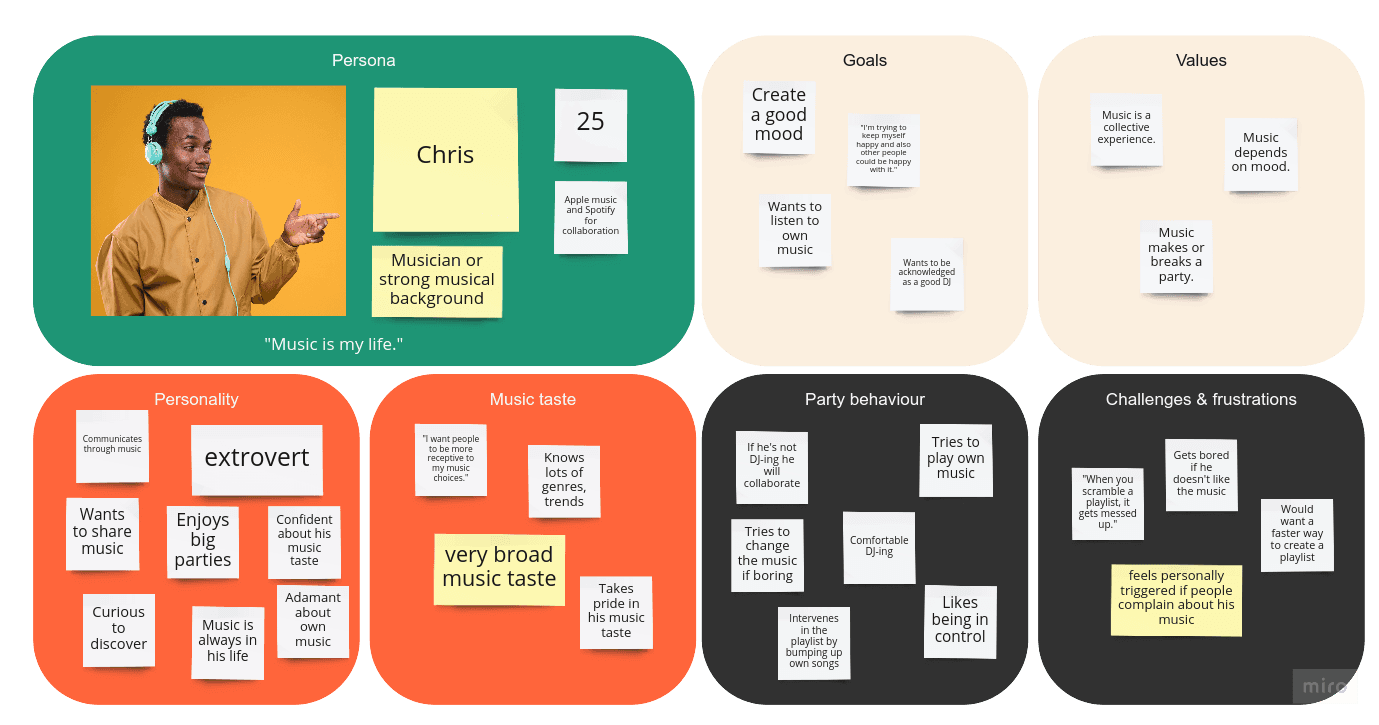
Patterns within the behavioural variables empahsised 3 distinct personas: Chris, the designated DJ at all parties, Alice, the regular partier, and Bob, the one indifferent towards music. We chose Chris as our primary persona, as a more opinionated person who would lead the way and potentially be an early adopter of the kind of music product we were shaping up.
From insights to HMWs
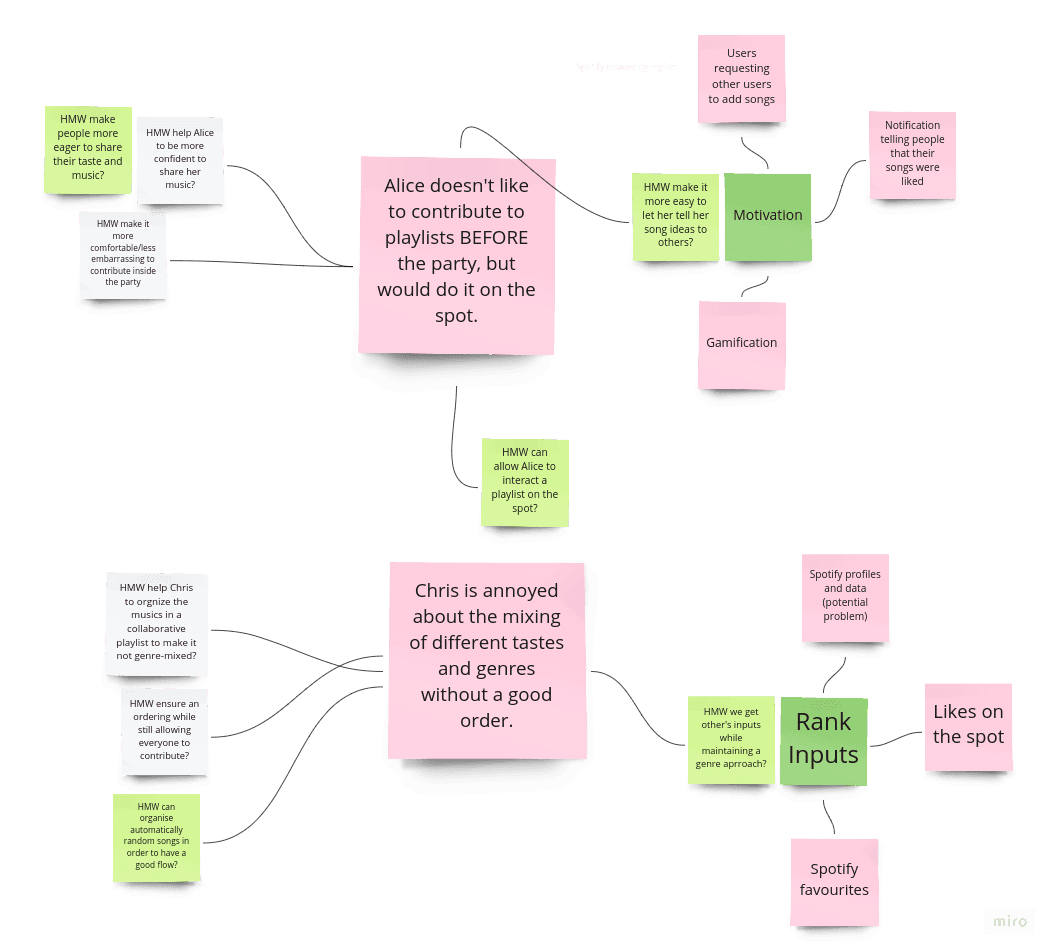
Interview insights were rewritten to address our personas by name: "Chris does not like his phone getting taken away when he's DJ-ing.". To get the creative juices flowing, we started converting insights into how-might-we questions. By doing so, we were able to focus on action-based statements, which were easier to convert into specific solutions or design ideas.
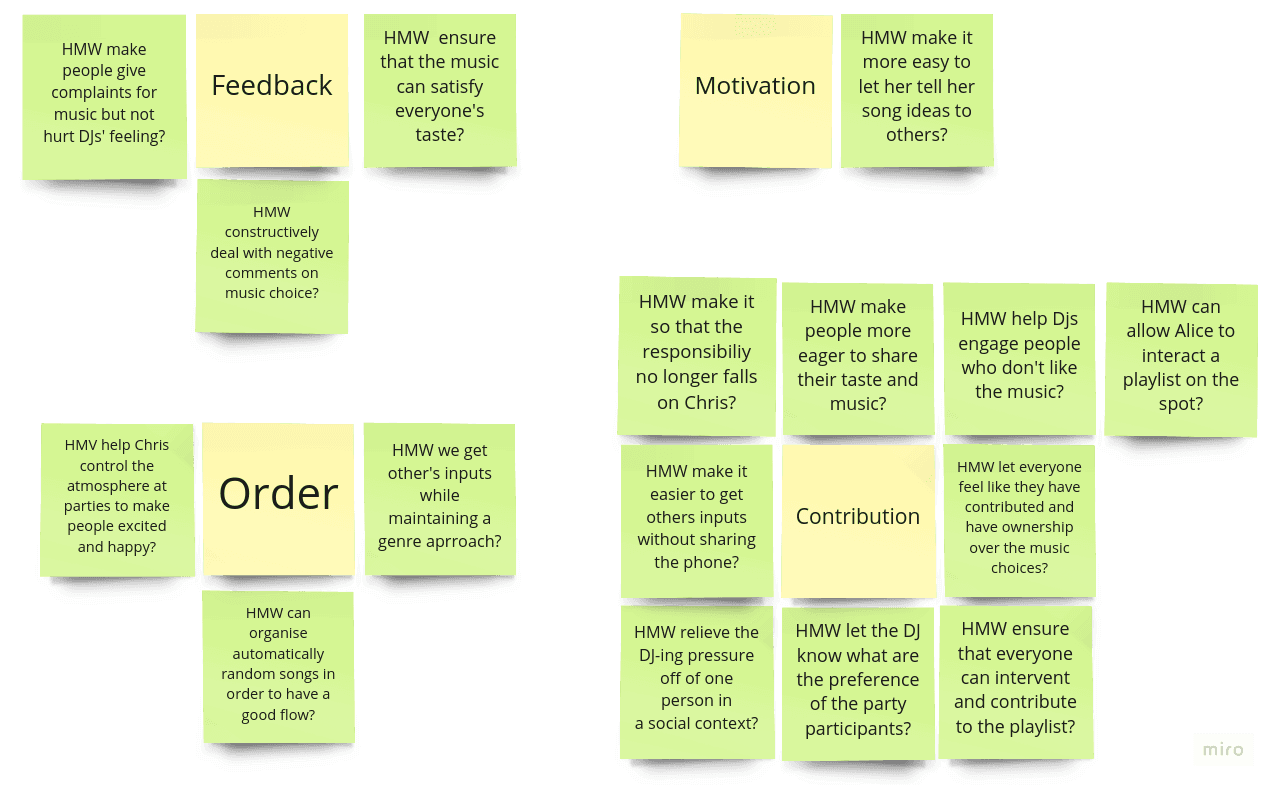
To narrow down the HMW questions, we extracted 4 themes: feedback, motivation, order, and contribution.
Problem definition
How might we relieve the DJ-ing pressure off of one person in a social context and encourage collective contributions?
Develop
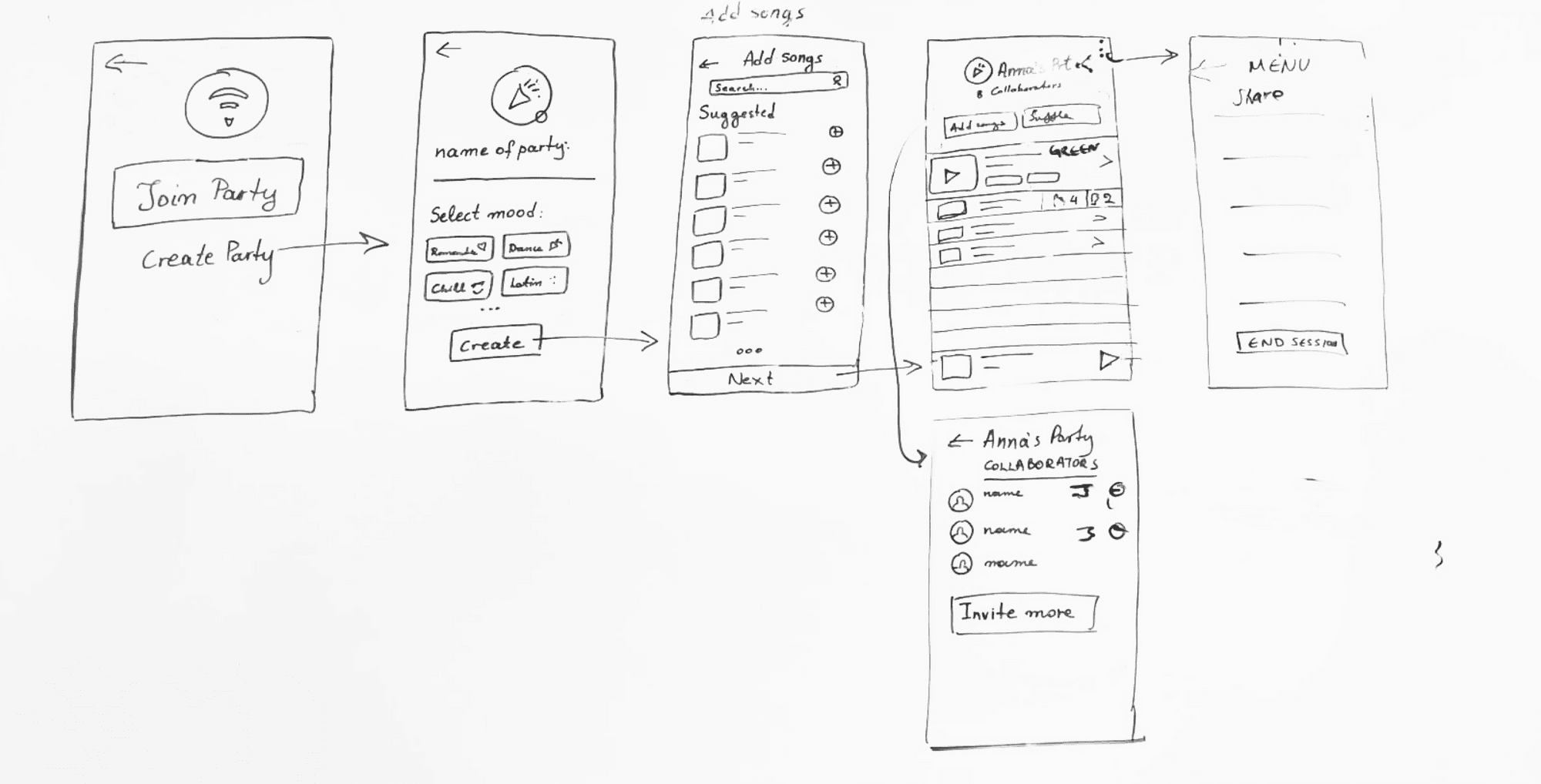
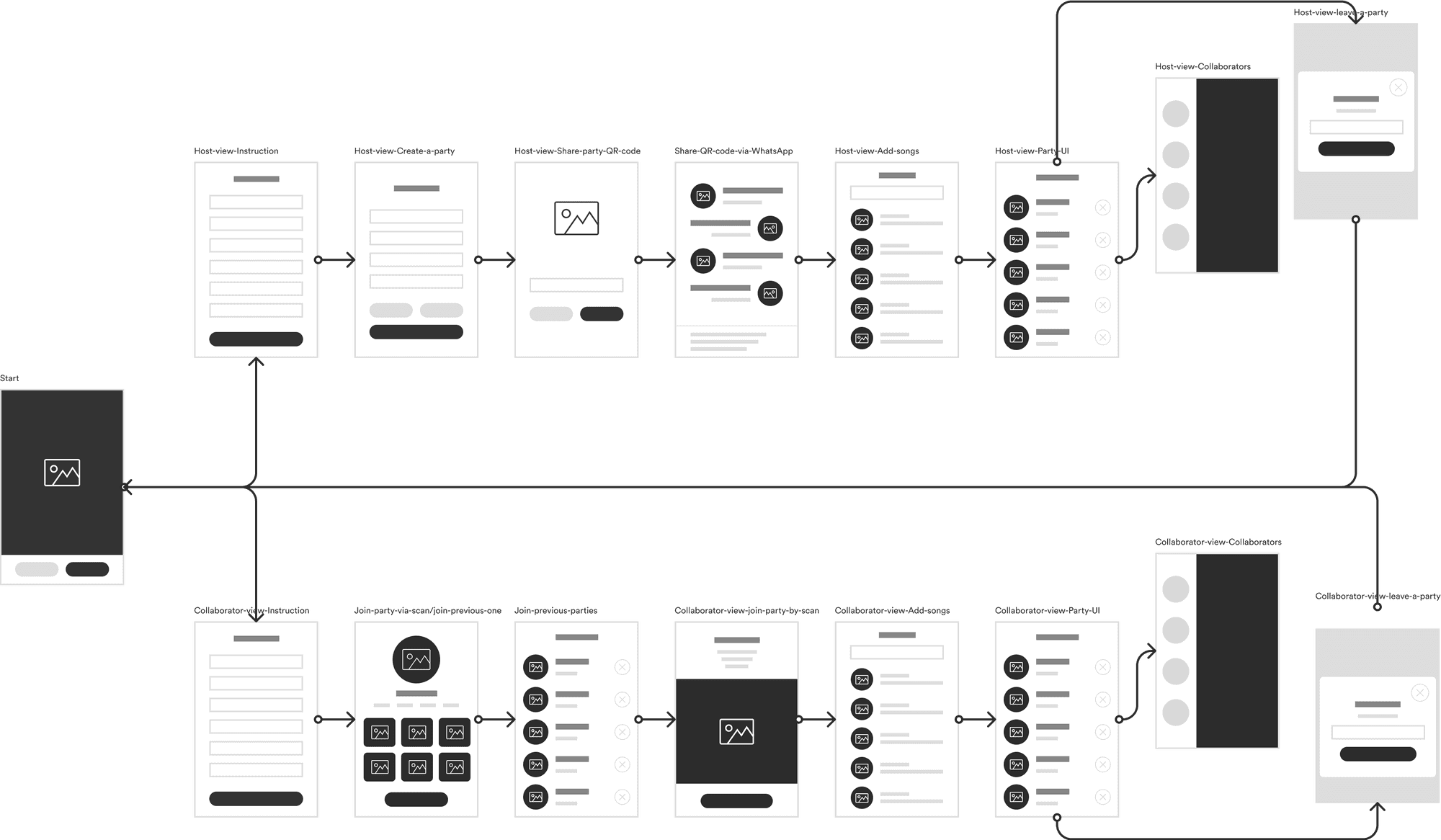
We used a range of interaction design methods, such as worst possible idea and brainwriting, to ideate solutions to our problem statement. We mapped out functionalities through user journeys and sketched out some basic flows.
Lo-fi prototype
Wireframes
Hi-fi prototype
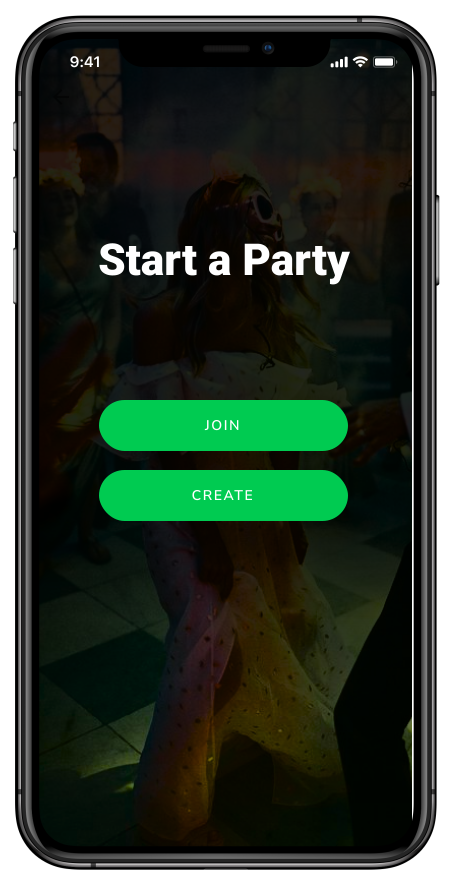
Join an existing party…
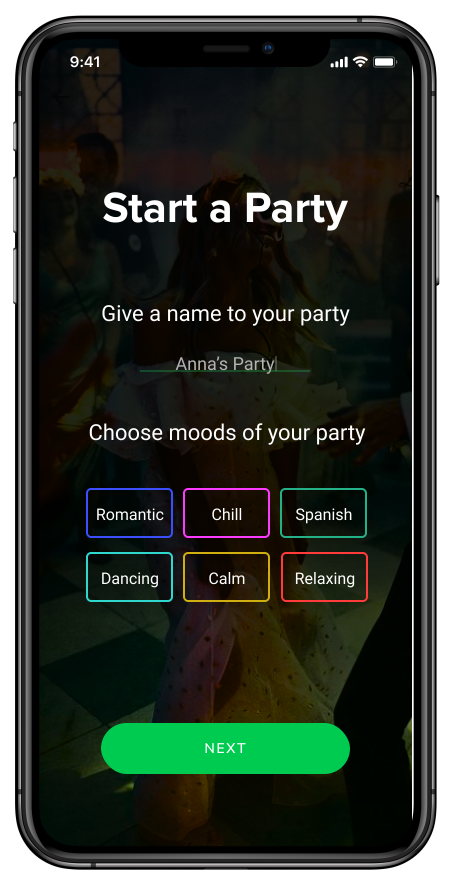
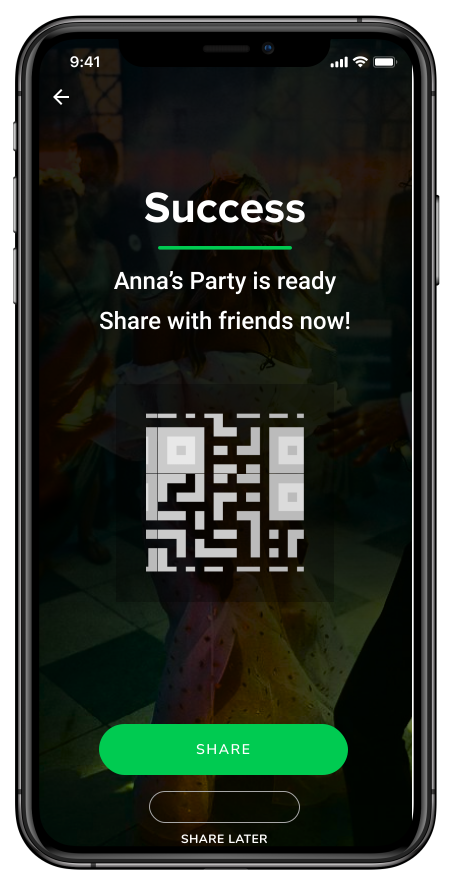
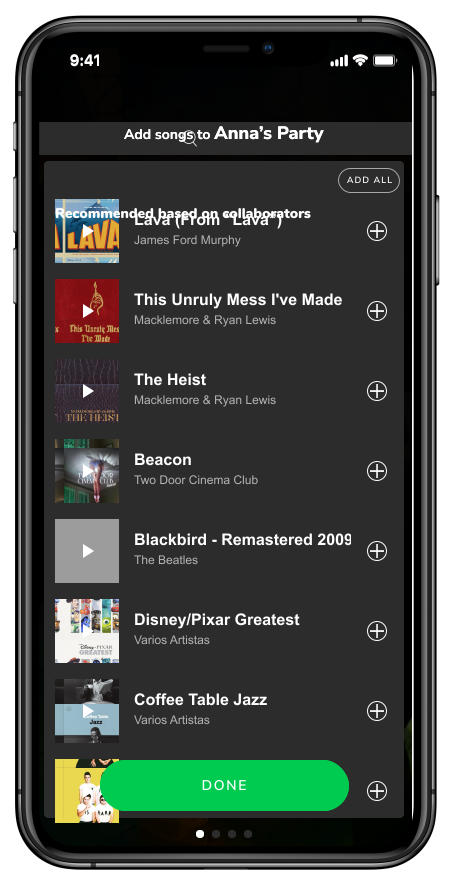
…or create your own!
Scroll to top